
…………and Siddhu smiled !

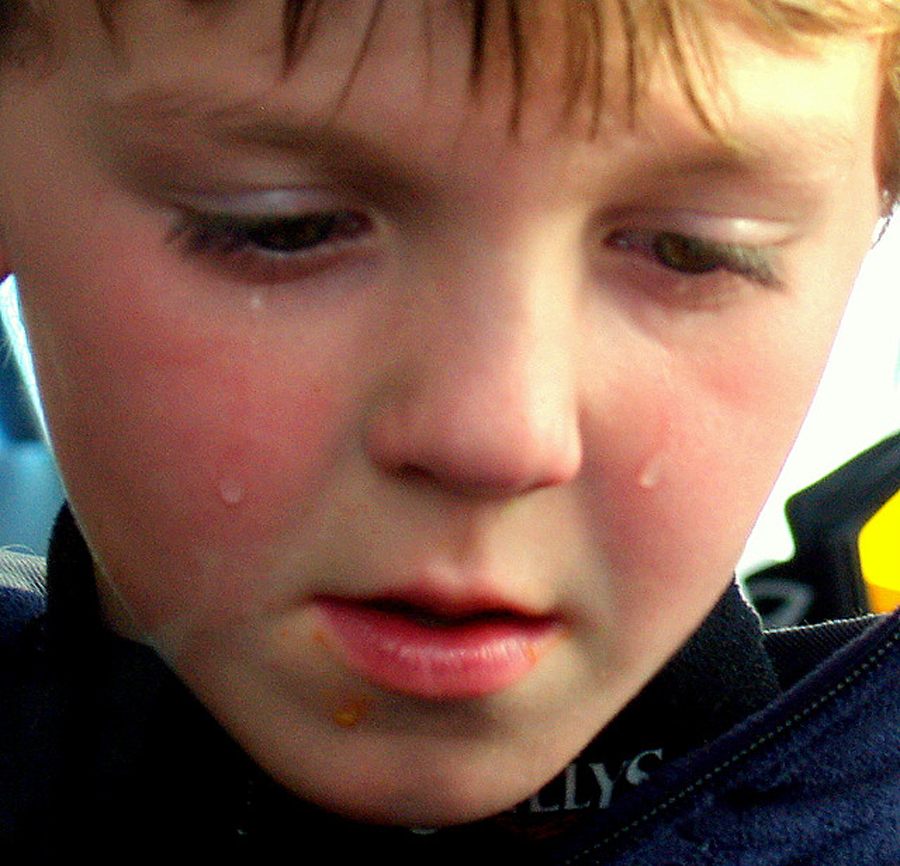
Siddhu, studing in 1st standard was brought to me about 6 months back for being completely mute (silent) for 3-4 days. His entire family was worried and had come along with him to my hospital.
On spending time with the kid, few things were noted. He was the only child of a working couple. Apparently Siddhu had received appreciation in form of three golden stars for his school activities in prior 10 days. However, parents had not noticed this, as they were too busy ! The aaya (caretaker) who used to look after Siddhu for entire day, didn’t understand what the kid was talking about ! On Sunday too the couple had gone out for a social get-together leaving Siddhu with the caretaker. So, Siddhu didn’t get the appreciation he expected, from his parents.
The above issues were brought to notice of the parents, who readily accepted their mistake and agreed to make necessary changes in their interaction with Siddhu.
Thus, things changed for good for Siddhu…….
…… and Siddhu smiled !
Moral of the story
1) Appreciate your children for the smallest good deeds.
2) Spend time with them. Never compromise on time committed to them, at any cost.
3) This applies mainly to nuclear families with no grandparents.
10 guidelines for a happy family

- Family -however small or big – should function like an unit with some basic rules to be followed by every member.
- Each member -young or old- should have his/her share of responsibilities.
- All members should have a schedule which is predictable, atleast to some extent.
- There should be a definite time period of the day when all family members come together.
- During the period when all family members are together, everybody should avoid using mobile phones, internet or watching T.V.
- Everybody should be vocal about their problems, but with intent to solve the problem and not to insult, show down or argue with other family members.
- Listen & respect other members’ opinion, even if you may not agree with it.
- Promote a sense of ‘belongingness’.
- Every individual member’s space should be respected by all other family members. Everybody should try & pursue his/her hobbies etc.
- All major issues should be discussed openly and a final decision should be arrived upon. This decision should be binding upon all the family members.
The man with the stolen fan…..

It was about 7 pm. It was raining outside. I was waiting for my wife in my car along with our son. That’s when I saw a person, walking next to my car. I could make out that he was an alcoholic, from his swaying walk. He was carrying a brand new fan in his hand, probably stolen from somewhere !
Something interesting happened next….
As that man continued to walk, he came across a apparently well-to-do couple, who were passing by, with their two school going children approximately 12-14 years of age. The alcoholic man offered them to sell the fan for a petty sum, which probably he needed for his next drink. The husband definitely appeared to be intelligent enough to understand that this man must have stolen this fan from somewhere and was selling at a very low cost. The couple purchased the fan and gave that person the sum he asked for. A very smart deal apparently..!
I was just thinking about this incidence….
I was not worried about or thinking about the price of the fan, nor about the person purchasing the stolen fan. I was just thinking about the children of the couple.
What had they learnt and perceived from this incident and from their parents ????
What do you think ?
How to establish a positive self image in your child?

Creating a positive self image about himself / herself is the most important contribution parents can make to their childs life. A positive self image is established by timely appreciation for good deeds, demonstration of good moral values by parents themselves, promotion & exposure of child to good things / events arround in the society.
A feeling that ‘I am a nice & lovable person’ about himself / herself, will ensure happiness and success throughout your childs life.
Obsessive Compulsive Disorder

Q : I am a 42 year old individual. I own a small cycle shop. Since last 3-4 years my wife has been noted to have lot of oddities in her behavior. She is keen about cleanliness which is more than an average individual. All the time she is preoccupied about cleanliness, and is noted to be cleaning the house, utensils, cloths etc continuously. Whenever she goes out, she washes all her cloths, take an overhead bath & is keen that we all i.e. myself and our two children also do the same. She washes all utensils in the house 3-4 times in a day. If anybody visits our house, after he leaves, the cleaning procedure starts again. She has to clean the chairs, bed sheets etc. She spends lot of time in the bathroom, cleaning the bathroom. She needs about one cake of soap every 2-3 days. As she spends lot of time in water, she has developed small injuries over her palms and feet. She finishes approximately one and half thousand liters of water everyday, and if there is no water, because of water scarcity, she asks for a water tanker and continues with her cleanliness program. Myself & our children are all fed up of her activities. We are unable to convince her & we have to follow the rituals even if we don’t agree to them. What do we do?
Ans : What you are describing above is a classical example of OCD i.e. Obsessive Compulsive Disorder. In marathi it is also called as ‘Mantrachal’. In this illness, the patient himself is distressed to a large extent. The relatives too are distressed watching the patient doing the rituals again and again and again overtime. In this illness the patient repeatedly gets the same thought about something and starts doing an act which he continues to do repeatedly. The classical definition of obsession is repeated intrusive thought, which the patient identifies as his own thought and acts upon this thought in the form of repetitive behavior, are called as compulsions. The patient identifies these thoughts as useless, but is unable to ignore them. This illness occurs because of patient’s inability to shift his focus from one thought process to another. Due to his preoccupation he is unable to switch to any other task from the present task. With proper treatment usually patients improve significantly in this illness. There are lot of new
medicines which are available for this type of illness. But medicines alone may not be helpful, and patient may need to undertake what is called as behavioral treatment for this illness. I think your wife needs immediate intervention by a psychiatrist, and I am sure she will improve with the proper treatment.
Suicide is not the solution

Suicide is not the solution
What our children need ?

When children between age of 6-10 years are brought to me as a psychiatrist for various reasons, many -a- times I realise that these children basically need quality time with their parents and understanding from their teachers.
Bullying (Dadagiri) in school

Bullying in schools is a major problem. Many times, children who are bullied feel helpless. Parents too are unable to do much about it. Repeated complaints to teachers many a time lead to the child being labeled as a ‘complaint box’. These children, as a coping strategy, start becoming friendly with the back bencher ‘dada – gangs’ to control the other bullies.
A false sense of security starts setting in. The child starts believing that his parents are unable to do much for him, and his group and friends are the only ones who would bail him out of difficulties. This sets in a vicious cycle, further distancing the child from the parents. I really wish, teachers and school authorities take steps to address the grievances of these young children in initial stage itself, to avoid the behavioral problems and reckless behaviors seen in later adolescence.
10 basic principle of managing school refusal in primary classes
- Talk to your child to understand his / her problem, acknowledging his / her fear and anxiety.
- Take child in confidence and let your child know that you are able to understand the problem and you are with him / her to solve the problem.
- Understand that each child is unique, and may be perceiving the events in different ways. Thus, avoid making comparisons. Try and avoid ‘pushing’ the child in the school without identifying and solving the core problem.
- Avoid stressful family situations / circumstances to occur in front of your child. Try and sort them in absence of the child.
- Take out some quality time with your child everyday; let your behavior suggest that you love your child and you are there for him / her always !
- Consult school teachers if child is having any school related problems such as – inability to understand certain subject, bullying, fear about some subject or some teacher etc. or if somebody is misbehaving with the child.
- In case of transfer to a new school, understand the problems such as-child’s inability to adjust with new environment, in making new friends, feeling lonely in new school, nostalgia for old school and schoolmates.
- Ensure your child a reward for maximum attendance. Explain the child disadvantages / problems child will face due to this refusal.
- Encourage your child to go to school and have good friends.
- Teacher’s should encourage children to talk to them freely / openly about their problems in the class.
Take professional help, whenever essential !
Stress Management – part 04

Stress Management – part 04
The Happiness Guide
 Download our free ebook & learn how to live a mentally healthy & stress free life.